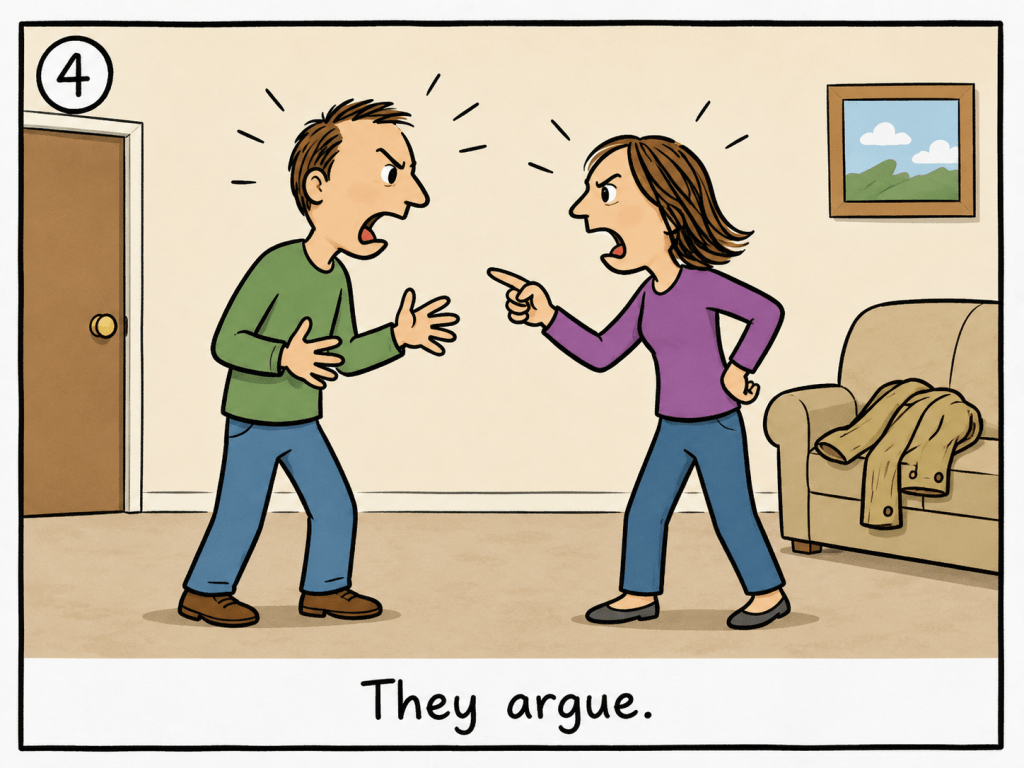
Have you ever known exactly what needs to happen in a scene but still found yourself staring at a blank page?
Maybe your characters are waiting in a tense living room. Maybe someone needs to reveal a secret, escape a spaceship, kiss the wrong person, or discover a body behind a locked door. You know the general idea, but turning that idea into actual words feels strangely impossible.
The good news is that there is no single “right” way to write a rough draft. A rough draft is not supposed to be polished, brilliant, or even completely logical. Its job is simple: get the scene out of your head and onto the page.
Here are five ways to do that.
1. Pants It
Pantsing means writing a scene without an outline or plan. You may have a vague idea of where the scene begins or what needs to happen, but then you simply let the characters take over.
This is basically stream-of-consciousness writing for fiction. Keep your fingers moving. Do not stop to fix grammar, rethink a sentence, check punctuation, or decide whether the dialogue is clever enough. If something feels wrong, keep going anyway. You can fix it later.
Even if you are normally a planner, it can be useful to try pantsing from time to time. Sometimes an outline gives you structure, but sometimes it also makes you feel like you have to write the “correct” version of the scene. Pantsing can help you discover a more surprising version.
Set a timer for fifteen or twenty minutes and tell yourself that you are not allowed to stop writing until it goes off. Let the scene be messy. Let your characters say strange things. Let the plot wander a little. You may be surprised by what you find.
2. Start With a Bullet List
If jumping straight into prose feels overwhelming, begin with a simple bullet list.
Spend a few minutes writing down the major things that need to happen in the scene. Do not worry about making the list pretty. These are working notes, not something anyone else needs to see.
Your list might look something like this:
- Steve confronts Joanna when she enters the house.
- He is shocked and angry that she is there.
- Joanna acts calm, which makes him even angrier.
- The ticking clock makes the room feel tense.
- Joanna reveals that she has a right to be there because she is his wife.
- Steve realizes the situation is worse than he thought.
Once you have the list, start expanding each point into prose. Write quickly. Develop the dialogue, actions, thoughts, and sensory details as you go. When you finish a bullet point, delete it.
There is something satisfying about watching the list disappear as the scene takes shape. It gives you a clear path forward without forcing you to outline every little moment ahead of time.
3. Write the Scene in Beats
Another useful method is to build a scene from basic beats. A beat is simply a small unit of movement in the scene: a line of dialogue, an emotional reaction, a thought, an action, or a piece of setting.
You can move through the scene one beat at a time using categories like these:
- Dialogue
- Emotion
- Thought
- Action
- Setting
For example, you might draft a scene like this:
Steve: “Why are you here?”
He feels a sudden sickness in his gut.
I don’t believe this.
He clenches his fists.
Only the sound of the ticking clock fills the room.
Joanna: “I’m your wife. I have a right to be here.”
Joanna throws her coat on the couch.
That is not a finished scene. It is not supposed to be. But it gives you the raw material you need.
From there, you can flesh it out into prose:
A splash of ice filled Steve’s gut, and he felt suddenly sick. I don’t believe this. She’s here. He clenched his fists.
“Why are you here?”
They stared at each other across the room, the ticking clock filling the silence between them.
“I’m your wife.” With unnerving nonchalance, Joanna tossed her coat onto the couch. “I have a right to be here.”
Using beats takes away the pressure of writing polished paragraphs immediately. You only need to decide what happens next, one small moment at a time.
4. Use a Two-Column Table
For writers who like structure, a table can be an excellent way to draft a scene.
Open a blank document and create a table with two columns. In the first column, write notes about what happens in each part of the scene. Include possible dialogue, random ideas, emotional notes, or reminders about what needs to be revealed.
In the second column, write the actual rough draft.
For example:
| Scene Notes | Rough Draft |
|---|---|
| Steve hears the front door. He assumes it is the wind. Then Joanna appears. | Steve looked up at the sound of the front door closing. For one hopeful second, he thought it was the wind. Then Joanna stepped into the living room. |
| He is furious but also scared. Mention the clock. | His anger rose so quickly it almost made him dizzy. Behind her, the old clock ticked steadily against the wall. |
| “Why are you here?” Joanna remains calm. | “Why are you here?” he asked. Joanna removed her gloves as though she had all the time in the world. |
This method is especially helpful when your brain is full of competing ideas. The first column gives you a place to dump your thoughts without losing them, while the second column lets you focus on turning those thoughts into a scene.
It is also a great method for writers who tend to stop drafting every few sentences because they suddenly remember another idea. Put that idea in the notes column and keep moving.
5. Map Out Possibilities
Sometimes you are not stuck because you do not know how to write the scene. You are stuck because you do not know which version of the scene to write. That is where mapping can help.
Take a piece of paper and draw a circle in the center. Inside it, write the main event of the scene. Expand the scene in a few different ways. For example:
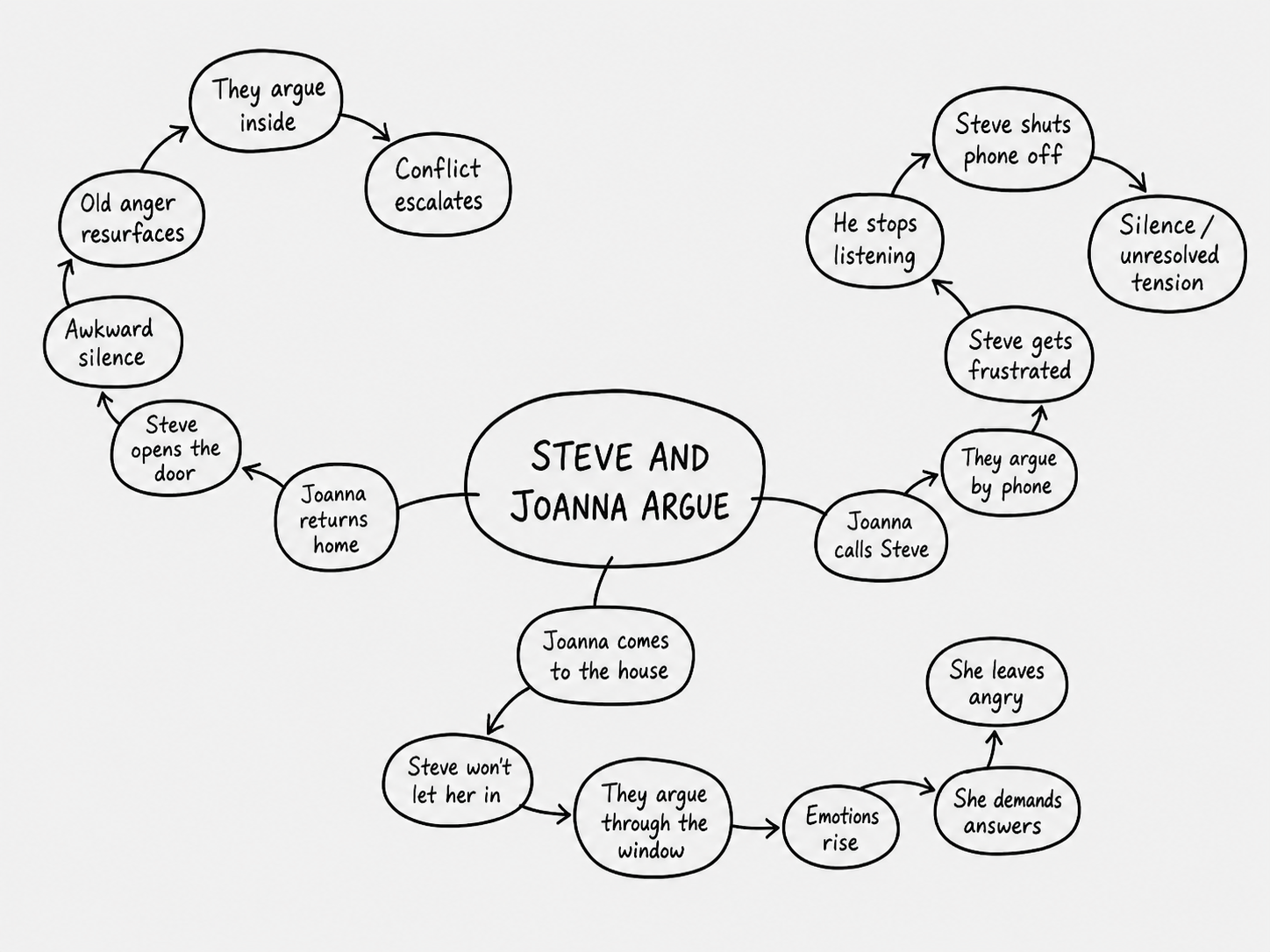
Keep branching outward. What does Steve do in each version? What secret gets revealed? How does the scene end? Which version creates the most tension or leads most naturally into the next chapter?
Pick the one you like. Or mix them up.
This method is a little like building a flow chart for your imagination. It gives you permission to explore several possibilities before committing to one. Often, the version that surprises you the most is the one worth drafting.
Bonus Method: Storyboard the Scene
Storyboarding probably will not save you time, but it can make planning a scene much more fun.
Grab a stack of 3 x 5 index cards. On each card, draw one important moment from the scene. You do not have to be an artist. Stick figures work perfectly well.
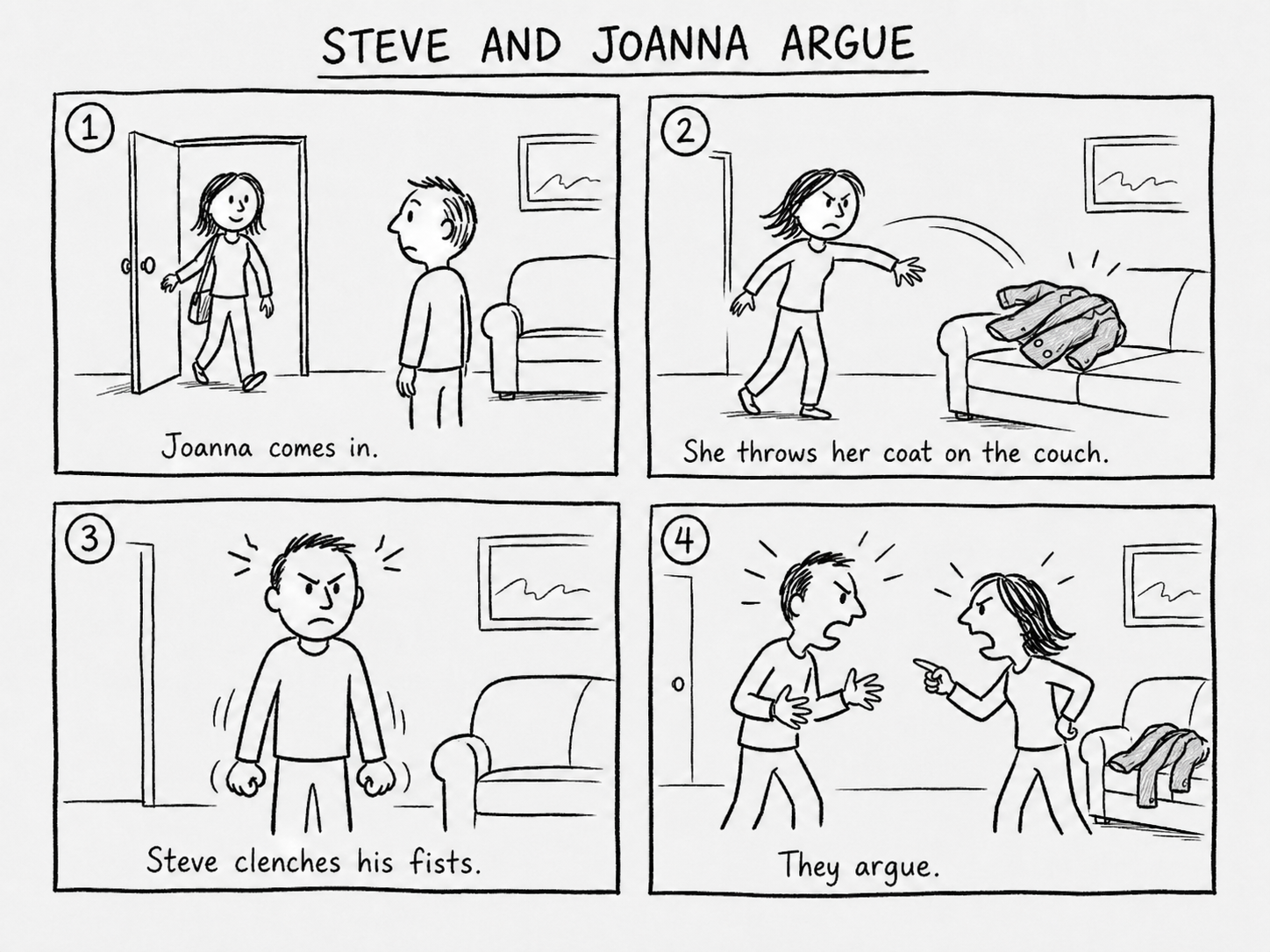
One card might show Steve hearing the door. Another could show Joanna entering the room. Another might show the clock ticking while they stare at each other. Keep moving the cards around until the sequence feels right.
The best part is that you can physically rearrange the scene. Maybe Joanna should reveal her secret earlier. Maybe Steve should leave the room before she can explain. Maybe the scene needs one more beat of silence before someone speaks.
Storyboarding is especially useful for action scenes, emotionally complicated confrontations, mysteries, and scenes with several characters moving around the same space. It lets you see the scene as a series of visual moments before you worry about the words.
The Goal Is Progress, Not Perfection
Every writer gets stuck sometimes. Usually, it is not because you do not have talent or because the scene is impossible. It is because you are trying to draft and edit at the same time.
Try one of these methods when the blank page starts feeling too intimidating. Pants the scene. Make a bullet list. Build it from beats. Create a table. Map out your options. Draw terrible stick figures on index cards.
The method does not matter nearly as much as getting something written.
A rough draft can be awkward, overwritten, underwritten, confusing, and full of placeholder dialogue. That is okay. You cannot revise a blank page, but you can revise a messy scene. And sometimes, hidden inside that messy scene, is the version you were trying to write all along.

