
I watched the new Netflix series called One Piece over the Labor Day weekend. I recommend it if you’re looking for both humor and drama. Being a pirate-themed show, One Piece has a lot of swashbuckling fun.
Monkey D. Luffa wants the One Piece, a treasure hidden by the executed pirate Gol D. Roger. He begins his heist adventure by recruiting his pirate crew and trying to get a ship. Unfortunately, many other more established pirates also want the One Piece and see Luffy as an annoying obstacle to deal with.
But Luffy is now my hero. He doesn’t want to be a pirate; he knows he is a pirate. And ultimately, he intends to become “King of the Pirates.”
About One Piece:
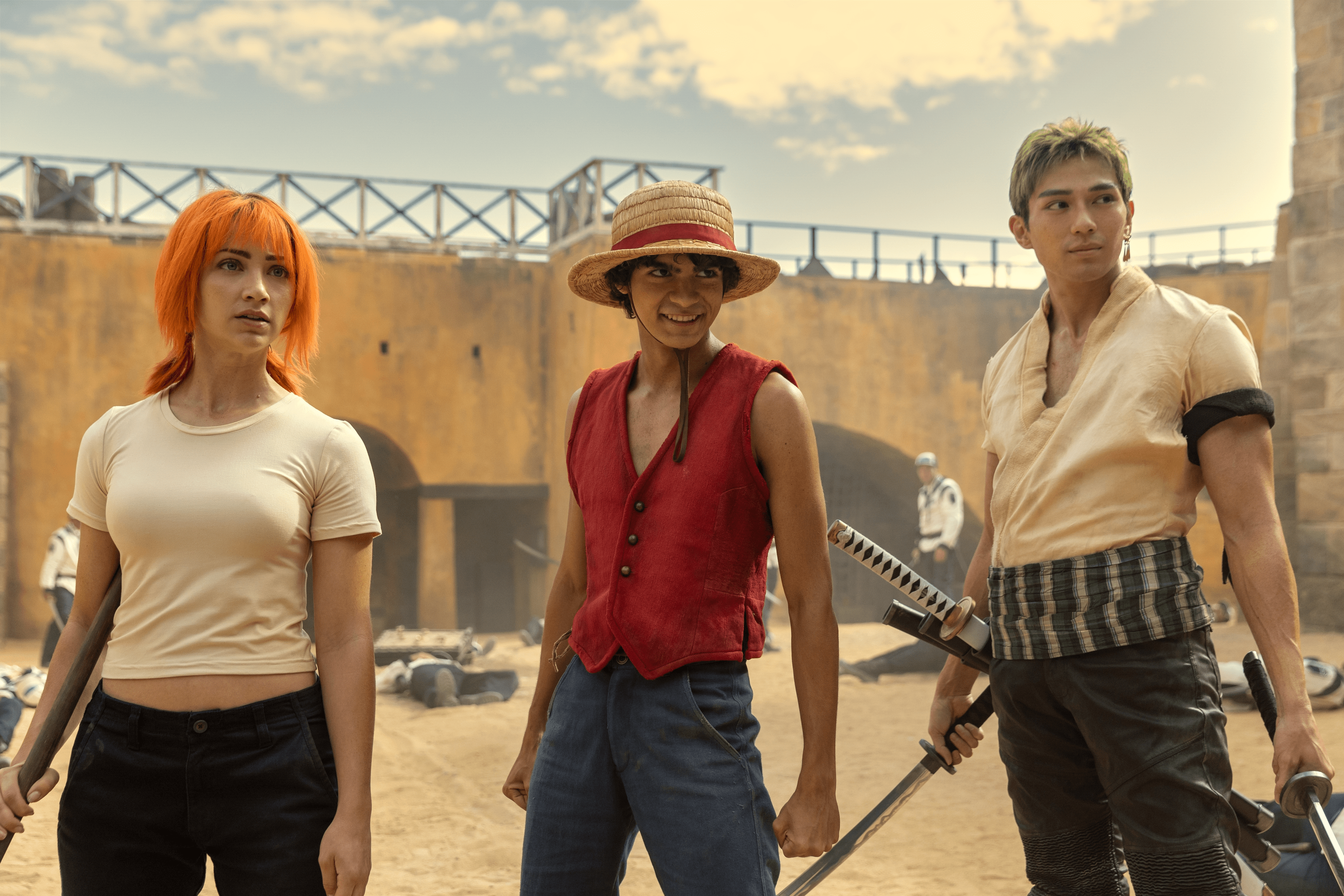
One Piece is based on Japan’s highest-selling manga series in history by Eiichiro Oda. Its first incarnation was as a manga comic book started in 1997 and still runs to this day. The anime cartoon series of the same name began in 1999. Neflix released the first season of the One Piece live action series in August of 2023. This latest version of the pirate story was developed by Matt Owens and Steve Maeda.
As I watched the 10-episode series, I kept thinking about how the writers of the show employed some great storytelling devices. Fiction writers can employ these techniques in their own projects. I made a list of some of the fiction elements that stuck out to me. Be warned, SPOILERS AHEAD.
Character goals
This is pretty basic fiction writing knowledge. But One Piece made it clear that every character had a goal, not just the protagonist. We know from the beginning every pirate wants the One Piece. Specifically, Monkey D. Luffy wants to be King of the Pirates. But what about the other supporting characters?
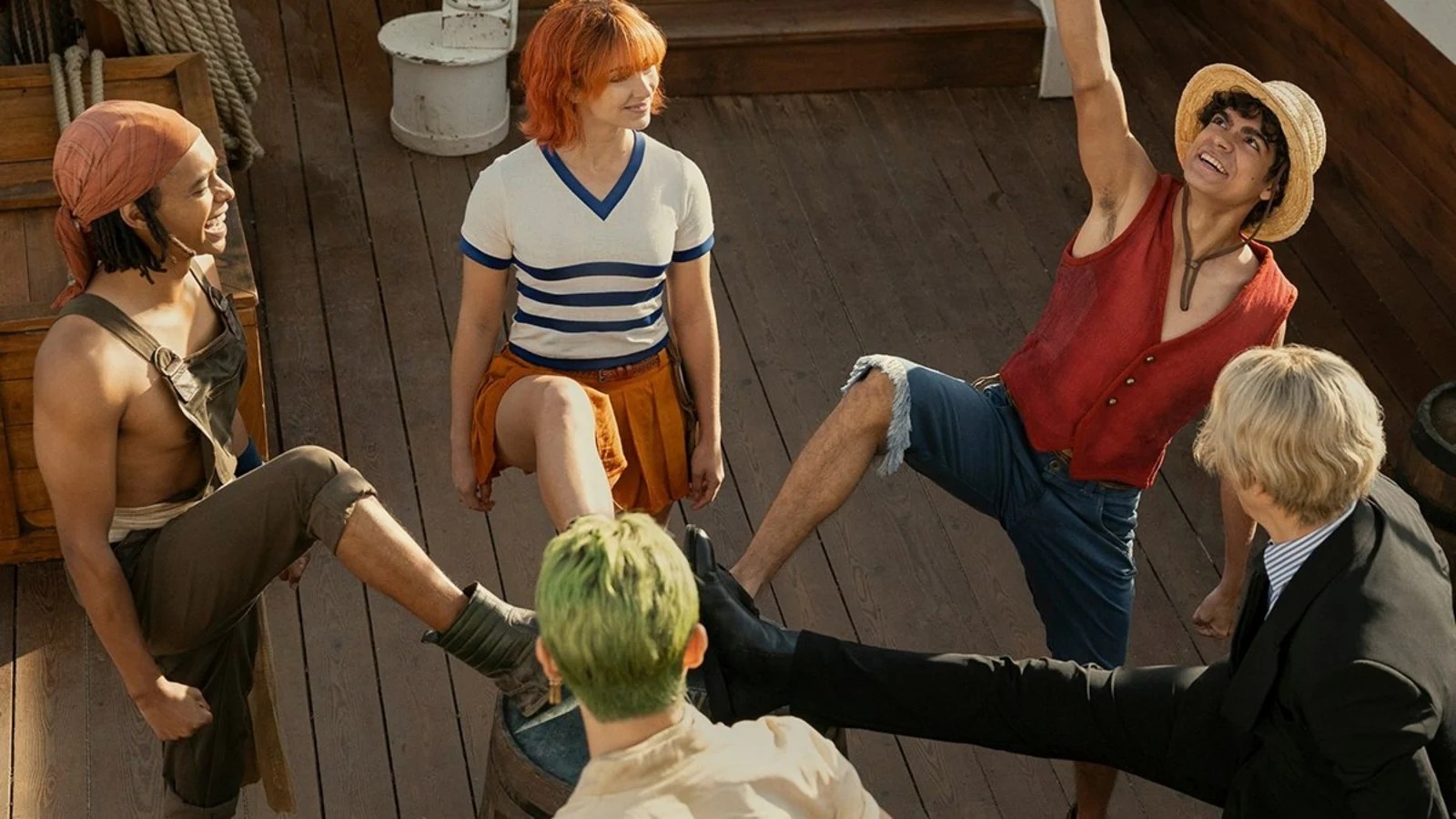
Swordsman Roronoa Zoro wants to be the best swordsman in the land. Nami wants to raise enough money to free her village from an evil pirate. Koby wants to be in the Marines. Usopp wants his pirate father to return. Sanjii wants to be a gourmet chef. I felt every character, no matter how minor, had a goal.
The lesson is this: make the goals of the characters clear to the reader, and have goals for every character, not just the protagonist.
Precedent for an action
An action for a character shouldn’t just come out of the blue. Throughout the entire season, Garp, a Marine Vice Admiral, tries to prevent Luffy, his grandson, from becoming a pirate. He would rather Luffy be a marine.
But in the last episode, when Garp and Luffy finally confront each other face-to-face, Garp pushes Luffy to his limits. Luffy absolutely refuses to relent and tells his grandfather he can’t stop him from being a pirate because he already is one. The admiral relents and says he just wanted to test Luffy to see if he really wants to be a pirate.
I can accept this seemingly sudden change of heart because in an earlier episode, Garp’s method of testing people to see if they really want something had been established. When Koby becomes a marine, he is questioned by Garp. The admiral looks at the small young man and questions whether Koby has what it takes. When he is convinced Koby is determined to be a marine, Garp begins mentoring him.
Garp’s method of pushing someone to their limits is established early on so his actions are believable in the final episode. By testing Koby in the beginning of the story, his testing of Luffy doesn’t seem so random.
The lesson is this: the writer can present a character’s personality in a small way at the beginning of the story so that it makes more sense later when it comes out in a bigger way.
Withholding info
By not telling the reader the why of what’s going on, the writer creates suspense. Throughout each episode, the characters act in certain ways, but the audience doesn’t know why. Why does Zoro have to have his sword with him everywhere he goes? Why does Nami want to leave the crew? The reasons for these actions aren’t revealed at first. As a result the audience–or the readers–are kept in suspense.
The writing lesson is this: create intrigue and tension; don’t explain the “why” right away. Which leads us directly to . . .
Backstory informs motivation
Why are the characters acting the way they are? By withholding info, suspense is created. But the answers are slowly revealed and the overall story begins to be unpeeled layer by layer like an onion. Yes, One Piece reveals the backstory of each of the main characters throughout the series. The result not only answers questions, but gives the series more depth.
Luffy’s whole perspective on life comes from Shanks, a pirate who befriended Luffy when he was a child. Throughout the episodes, Luffy claims to be “a different kind of pirate.” He got this from the examples Shanks demonstrated. Luffy yells “no one threatens my friends.” In one flashback, Shanks yells this to a pirate who his attacking young Luffy. Luffy’s backstory slowly reveals why he says what he says and does what he does.
I loved how Nami’s backstory gradually changed my perspective of her character. In the beginning, I thought she was just a typical street orphan who grew up stealing just to survive. But no. In the last few episodes, we get more and more of her backstory and we find out she steals because she’s trying to pay off a ransom.
A pirate named Arlong and his crew have held the people of her village hostage since Nami was a girl. The people serve as slaves for Arlong and pay large sums of money to him. Until it is revealed Nami steals to raise the ransom to free her people, the audience isn’t sure if she is a good guy or not. Finally there is an “A-ha” moment when we understand why she steals, why she needs to leave her new-found friends.
When Nami befriends a young woman named Kaya, Nami shows uncharacteristic sympathy. Kaya has lost her rich parents and is being controlled by her scheming butler. But Nami, who up to this point has been only about herself, softens as she listens to Kaya’s story. But why is Nami suddenly so caring for someone else? It isn’t until later, when her backstory is revealed, that we learn Nami can identify with Kaya because she’s in a similar situation. By the way, this is another example of setting a precedent of a character’s actions.
The writing lesson is this: backstory can create suspense, reveal character motivation and make your story have more depth.
Cliffhangers
As a fiction writer, I know I should often end a scene or chapter with a cliffhanger. Two cliffhangers stuck out to me while watching One Piece.
The first is when we find out, at the end of one episode, Nami is in communication with someone she works for. We don’t find out until much later that she is working for Arlong. Not willingly, but to let him know she is doing his bidding. That’s why she contemplates leaving Luffy and his crew: she’s long communication with Arlong as is afraid he’ll harm her people.
The second example of a cliffhanger is my favorite of the series so far. We know the marine admiral Garp is after this punk pirate wanna-be named Luffy. But why? Is it because he’s an annoying little punk? At the end of one episode, Garp is on a marine battleship and is about to take out Luffy and his crew on their new pirate ship. Luffy looks through a telescope and sees Garp on the deck of the marine vessel and exclaims, “Grandpa?”
For me, this revelation turns the whole show on its head. The writers could have revealed Garp was Luffy’s grandfather from the beginning. But withholding this information until the end of the episode makes this stakes more personal for Luffy. And it’s a big shock for both the other characters and the audience.
The writing lesson is this: cliffhangers can be used for more than trying to keep the reader to keep reading–which is definitely important. A well-used cliffhanger can create more depth for the plot and characters.
These are just some of the fiction writing lessons I learned from the live-action One Piece on Netflix. But don’t worry. Watching the show as a writer won’t diminish your enjoyment. One Piece is well-done and I highly recommend it.
 Andrew M. Friday
Leave a comment